Showing posts with label Prayer. Show all posts

Thursday

Last Rites / Anointing of the Sick

This is a beautiful story by Aimee Milburn of Historical Christian, regarding her brother Mark, his death, and how the Catholic Sacrament of "Last Rites" played such a vital role in both of their lives. In her own words she writes the following:

Mark was born just 17 months ahead of me, and we grew up together, one grade apart in school. We fought like cats and dogs when we were little, but by the time we got into high school we realized we could be allies against mom and dad, and became friends.

It was a pretty free-wheeling time, the sexual revolution was in full swing, and I decided I was a liberated feminist, and my brother decided he was gay. We both embarked on our respective free-wheeling lifestyles, my brother plunging into the gay lifestyle. We traded stories with each other, commiserated about relationships, went dancing together when we got old enough to get into clubs, and traveled together. We really had some adventures, and I loved my brother dearly.

This was before anybody had heard of AIDS, but within a few years we did hear about it. And one Christmas afternoon I received a phone call I will never forget: my brother, telling me he had contracted the virus. I was 25. I knew my brother had just received a death sentence. I cried that night like I’d never cried before.

As it turns out, my brother was a long-term survivor, lived 15 years with the disease. During those years I lived in different parts of the country, but we stayed in touch, carried on long talks on the phone, and always sent each other $20 on our birthdays. One year I received a $20 bill on which he had written, “This is the $20 bill we always exchange on our birthdays.” I kept it, still have it packed away somewhere.

I always told my brother during those years that if he really got sick and it looked like the end was coming, I’d move back and help him, and be with him when he died. He managed to stay somewhat healthy for several years, with the help of drugs and good diet, but gradually he declined. He went on full disability for a few more years, but hated it, so developed hobbies to stay busy. He turned his entire front yard into a flower garden, filling it with rose bushes and giant sunflowers and all kinds of other flowers. He filled his apartment with plants and aquariums.

Finally, one day I got a call from my parents that Mark had gone into a real decline, and it wasn’t clear how long he would last. I was living in Seattle, a place I loved with a job and a community I loved, but I resigned the job and moved back home, to help my brother and be with him when he died, as I always said I would.

Continue reading "The Death of my Brother, and Hope" »

Wednesday

Events Greater Than Our Own


.
It helps us to remember that there are events happening in the universe far greater than the casual activities of our ordinary daily lives. Actually, there is a war raging all around us. A war that is fought between spiritual forces far greater than our human intellect can now conceive. A Christian Psychology, thus a Catholic psychology, takes into account the entire picture of human existance and history. It places into perspective mankind's petty relational contentions, and views them in the context of all creation.
.
"For we do not wrestle against flesh and blood, but against principalities, against powers, against the rulers of the darkness of this age, against spiritual hosts of wickedness in the heavenly places." (Ephesians 6:12)
.
These forces are envious because very God in Christ took on human flesh, thereby welcoming and paving the way for the human race to become God's very family for those who will be His disciples. ... So now Satan, and one third of the angels that he brought down with him with vicious lies and defiance against God, jealously battle to destroy we of flesh who are made in the Creator's image.
.
This is our psychology, our thinking, our manner of inter-relating in this great war that goes beyond just ourselves:
.
"For the weapons of our warfare are not carnal (of the flesh) but mighty in God for pulling down strongholds, casting down arguments and every high thing that exalts itself against the knowledge of God, bringing every thought into captivity to the obedience of Christ, " (II Corinthians 10:4-5)
.

Sunday

*How To Love A Woman*

"Complacency is an enemy, easy to recognize in others but difficult to admit in ourselves. It is rarely listed among the major human faults, yet it can hinder us in every form of personal growth. Complacency simply means being sure we're right, taking it for granted that our view couldn't possibly be wrong. It means judging others by what we think is right. It blocks out understanding and kindness, and justifies qualities in ourselves that we wouldn't find tolerable in other people. Smug complacency is often at the root of family dissension. ..."

"Let me not be quite so sure that my thinking is always correct. Let me begin by being a little critical of my iron resolution to have things my way. I will keep my ears and my mind open to the ideas of others, even when they don't square with mine. Then I'll be opening the door to growth. ..."

"My serenity does not depend on my winning every round in my battle with life. It does depend on my acceptance of others on their own terms. God grant me that serenity." ("One Day At A Time In Al-Anon", page 197)

"Husbands, love your wives, just as Christ also loved the church and gave Himself for her, that He might sanctify and cleanse her with the washing of water by the word, that He might present her to Himself a glorious church, not having spot or wrinkle or any such thing, but that she should be holy and without blemish. So husbands ought to love their own wives as their own bodies; he who loves his wife loves himself." (Ephesians 5:25-27)

Thursday

*Divorce ("Nobody's Home")*

"Better is a little with the fear of the Lord, than great treasures with trouble. Better is a dinner of herbs were love is, than a fatted calf with hatred." (Proverbs 15:16-17)

"Love is patient, love is kind, and is not jealous; love does not brag and is not arrogant, does not act unbecomingly; it does not seek its own, is not provoked, does not take into account a wrong suffered, does not rejoice in unrighteousness, but rejoices with the truth; bears all things, believes all things, hopes all things, endures all things. Love never fails ..." (1 Corinthians 13:4-8[a])

Sunday

*When Giving Advice Is Difficult!*

Do you see this face? ... I warn you, this is "not" someone you want to "mess" with! ... I'm talking about "Sister Mary Martha". ... A receiver of questions, and giver of advice. ... At the top of her blog ensconced forever are the words: "Life is tough. But Nuns are tougher. If you need helpful advice just "ASK SISTER MARY MARTHA". She'll help you. Just don't expect any sympathy."
.

Still, mercifully, she admits there are times she doesn't know what to say to peoples' questions. (Admitting that answering to a few sentences can be dangerous.) ... Let's read her own words:
.
... Suppose you tell me that your brother is a very sweet man but is somewhat neglectful of his wife. You go on to explain that he loves her very much, he is always there for her when it is really important, he's a good bread winner, a good provider. He just misses a birthday sometimes or shows up really late for family gatherings and his wife is embarrassed and it causes them to fight.
.
What do I say? I would say, keep your trap shut and say a rosary in his behalf and thank the Good Lord that they are more happy than not, that he is there where he really needs to be, that he loves her and that maybe she is being a little needy. If I had to talk with his wife, if she told me about all the things she needs from him, I might say, "Drop some needs."
.
But you've neglected to tell me, in your question, that the reason your brother is late is because he is being detained by the police, that his nickname is "Sonny"(always a red flag) and that his good behavior always coincides with the periods in which he is on the wagon.
Now my advice is really, "really" bad.
.
That's why I can't touch this. (Then she shows a letter!):
.
"I've been in a rocky relationship for over half a year now. Lately I've been wondering what it is I am supposed to do. Do I stay and stick it out even though I am suffering right now because God wants us to persevere through the dark times for what is important to us? Or is the fact that I'm so unhappy lately a definite sign that I'm not on God's path for me? Nothing at all seemed odd to me but then I tell my best friend about my dilemma and she looks at me like I'm nuts to think about it that way. So I started wondering if God really does work that way. Does He have a specific plan for each of us? Or just some of us? Or is it more general like 'do good, be good, love God'? Is He really concerned about my love life? Or just the condition of my immortal soul as in I can date whoever I please so long as there is no sinning? I'd like to hear your thoughts on the matter, Sister. I feel sort of ignorant at the moment. Thanks."
.
Unhappy for the entire year and a half, or just the last six months or just last couple of weeks? Unhappy because he makes you feel unsafe and unloved?
.
He makes you feel unsafe. Because he's been known to fly into a rage? Or because he's never on time to pick you up from work?
.
He makes you feel unloved. Because he is cold and dismissive? Or because he forgot to get you a birthday card?
.
Or unhappy because he doesn't do what you think he should do? ....... He can't hold down a job? Or he doesn't pick up his socks?
.
Is his nickname, "Sonny"?
.
My question is: Why ask me? You should be telling "him" this stuff.
But what do I know? I'm a nun. Jesus doesn't even "wear" socks, so that's never an issue. ...
.
....... I understand that this is a very "real" and a very "important" problem. I just what to explain as fully as I can why it would be "BAD" for me to try to give you dating advice. You can see how this could really go right off the rails. I could be doing you "serious harm".
.
As for God's plan. .... He "does" have a plan and He does care about "every aspect of your life". Unfortunately, He doesn't mail you a copy of the plan. But that's why we have the Catholic Church! So you and God can be as close as possible.
.
And His nickname isn't "Sonny".

Friday

*Healing Grief Before The Eucharistic Host*

(Anyone who reads the following story from a friend of mine will be deeply touched. Please give it your time.)

I just want to relate an experience I had through using the Sacrament of Confession and praying to Jesus through the exposed Host, the Blessed Sacrament.

For 13 years I suffered heartbreaking guilt and turmoil over the death of my infant son, whom I will call "John". My son was four months old at the time of his death. He had died from a head injury caused by a car accident where he was with his father at the time, alone.

I was washing diapers and couldn’t stop to hold John, who was crying to be held. I had 23 diapers and needed to wash them every day. It took some time since we had one of those old wringer washing machines. His father, whom I will call "Thomas", said he would take him for a ride to calm him down. That was the reason I was not there when the accident occurred, and can’t say what truly happened.

Thomas said he hit a bump on the road, and that John fell to the car floor and must have hit his head. (This was before infant car seats were developed.) The car was fine and so was his father. John was the only one with a head injury. This, I thought was suspicious. I quickly developed a hatred for Thomas, thinking that he must have done something to our son. My suspicion was based on the fact that Thomas never wanted to have children and never enjoyed John.

I lived with a sorrow that ached to the core of my being, to my soul. I felt I didn’t deserve to live. Somehow I kept an outward face of a fairly normal person, at least in my view. Every now and then, through these years, I would wake in the night and weep copiously with the heartache of a grieving mother, and one who felt tremendous guilt, who really just wanted to die.
.
Within four months after John’s death, the relationship deteriorated into drunkenness and abuse. I shall say that I escaped from Thomas because he had threatened to kill me. A number of years later I found out that Thomas had died of a drug overdose and exposure.

I eventually returned to the Catholic Faith and the Sacraments. I had been away for 20 years.

A few years after my return to the Church, I attended a retreat that was directed by a Jesuit priest who was also a psychiatrist. During the retreat, which was a silent one, he led us in a probing history of our pasts which allowed me to really scrutinize my part in this hurtful situation in which I was holding resentments against myself and my baby son’s father.

I discovered that, in the beginning of our relationship, I did not have any respect or concern for his feelings. He told me he didn’t want to have children, and I thought that somehow things would work out even if I did get pregnant. I thought he would rise to the occasion and be a good father anyway. I did not consider that he could really be serious about not wanting children. So my fault was in not respecting his wishes. I never believed in using birth control so I should have ended the relationship then and there, but I didn’t. I confessed this sin because in the end it did cause him hurt and emotional turmoil, the extent of which I am unaware.

During the four months of our son’s life he did not prove to be a loving father and this was evidenced to me by various things he would say, as well as just a general annoyed attitude he kept towards our son.

I owed it to my son to leave his father, for I did fear for my son’s safety. However, I didn’t have a faith that was strong enough to leave, while at the same time I had been convinced by Thomas telling me that no one would help me. I thought he was right. It really did seem that there was no one. We were isolated, living in the country and I had lost touch with friends and family because they didn’t approve of our relationship.

The priest I went to for Confession during the retreat was a Jesuit too (though as far as I am aware, he was not a psychiatrist or a psychologist). During the confession I told him the above. I told him that by my not ending the relationship, I hurt a lot of people. Specifically, myself, my family, and most of all, my son and his father.

The priest told me to go sit in front of the Blessed Sacrament (they were having adoration in the afternoon) and to ask Jesus to allow my son to hear my apology and for Thomas to hear my apology. He also absolved me from my sins which, anyone who gets absolution in the Sacrament of Confession, will experience as a sort of lightness of being.

That afternoon I went to the Blessed Sacrament that was exposed, and prayed that God would allow my son to hear my apology. I then made my apology. I looked at the Host in the monstrance and saw the outline of a mother holding a baby. I seemed to know it was Mary, the Mother of Jesus, holding my son. I closed my eyes and saw very clearly my son’s face bathed in a warm bright light. He had the greatest smile on his face, and I knew now he knows no sorrow, only continual joy. I knew my little baby boy had forgiven me.

I then asked God to allow Thomas to hear my sorrowful apology for not considering his feelings and wants. ...... I made my apology, understanding that he was listening since Jesus was allowing this. For just a second my mind wandered to the thought, ........... "I wonder if Thomas did something to hurt our son and if he will end up in Hell". Immediately I heard a man’s voice around my right ear whom I am sure was the voice of Jesus. He said, "That’s between me and him." ... I became so aware of my judging Thomas and that I had overstepped my boundaries there. I thought of what a frightening thing that can be, to make God’s business of justice my own.

I left the spiritual exercise feeling deep gratitude and joy for Christ truly present in the Eucharistic Host. Also, I felt deep appreciation for the priests He uses to guide us and direct us on our souls’ journeys.
*****
"In many ways, Our Lord, is calling us to worship and receive Him in the Eucharist. He speaks this desire in many ways: through the Pope and the Magisterium of the Church, in the Bible (John chapter 6), through his Blessed Mother in approved Marian apparitions, through the testimonies of Saints and Martyrs, through Eucharistic miracles, through Church approved messages given by Jesus by Divine Revelation, through our souls who long for Jesus in Communion, and through our suffering world which is in much need of prayer before the Blessed Sacrament. Unfortunately many of us disbelieve or have grown indifferent towards Jesus in the Blessed Sacrament." .......... (From THE REAL PRESENCE )
*****
Paragraph 174 of the Catechism of the Catholic Church states:
...
"The mode of Christ's presence under the Eucharistic species is unique. It raises the Eucharist above all the sacraments as "the perfection of the spiritual life and the end to which all sacraments tend." In the most blessed sacrament of the Eucharist "the body and blood, together with the soul and divinity, of our Lord Jesus Christ and, therefore, the whole Christ is truly, really, and substantially contained." "This presence is called 'real' - by which is not intended to exclude the other types of presence as if they could not be 'real' too, but because it is presence in the fullest sense: that is to say, it is a substantial presence by which Christ, God and man, makes himself wholly and entirely present."

Thursday

**The Rosary (For Men)**

Men, we have a problem. Don't tell anyone, especially the women. But men, we "do" have a problem.

Yes, we men love women. We cherish women, we appreciate women. Women are our joy, our light, our treasure in life. But to be honest, men, we have also used women, abused women, manipulated, ravaged, promised women love, but then each of us, at some time, have rejected, lost patience with, forgotten and abandoned women.

If you're a man, you know what I mean.

But in defiling what is conceptually sacred in women, with our male minds, hearts, and bodies, we defile as well ourselves for it's from women we are born, nursed, caressed and made to grow, only to return and defile again. And sometimes, again, again and again.

Can a man find his innocence? We men of God's good earth who call ourselves Catholics, but sometimes wonder because of currents of passion we feel deep inside us.

There "is" a place for men in the rosary. Mary, the mother of Jesus, the queen of all saints, welcomes us through the power and grace of the Holy Spirit, to be our mother, and we of both genders to be the very family of Jesus, Mary and Joseph.

Gentleman, many of us need this. Women do not always know how deeply we men hurt. So often we must truly be the providers, the protectors of our wives, our children, our families.

And yes, let us say it here, many of us men have been walked on and ignored. We do not all know the love of a mother. Many of us do not even know the love of a lover, who did not in the end manipulate with lies.

Sir, let me tell you something. As a man, you can survive almost "anything" for 20 minutes, right? (God knows you've had to!). I suggest that you seriously consider the relevance of praying the rosary on a daily basis.

You see, we men need the beauty and grace of a beautiful woman. Sometimes we demand this from our wives, but sometimes they do not have it to give. We men, too, need healing deep in our souls. Coming from broken homes, trauma after trauma, still we press on and pretend we don't feel pain. Yet we do, then quickly bury it in shame and doubt, and whatever else is nearest to us to pretend.

God understands. He knows you need love to be a man. Actually, love that respects you, not love that hurts you, then makes the world believe it is your fault.

Listen, saying the rosary in private, feeling the beads in your hands as you do so, this can awaken your manly heart to a beauty and love, a respect that a man needs from the elogence, grace, even charm of our immaculate virgin holy mother. This, with the passion of Christ's crusifixion, is where you find healing and wholeness for the man you can be.

Let us men not be embarrassed. We can keep a manly rosary somewhere in a pocket, a box. No one needs to know. God knows. He hears. He sees.

Stop thinking you have to "make" yourself a man. Ask God to do it. Let Him be your Protector, the Giver of manly stamina. Let our Holy Mother nurture you where you have not been before. She is full of grace, a Virgin. Not someone who will tempt you, nor will be tempted by you. She, and the Trinity that is God, is all that you need.

Pray the rosary. Daily if you can. Then return to your family and be the man you can truly be. Remember, you will forever be with the family of God. There will never be an end to that eternity.

"FOR MEN WHO PRAY THE ROSARY, OR WISH TO, WHO ALSO THINK DOING SO IS A MASCULINE THING TO DO, PLEASE LEAVE A BRIEF COMMENT FOR THE ENCOURAGEMENT OF OTHER MEN TO PRACTICE THIS VALUABLE FORM OF REFLECTION, PRAYER AND MEDITATION. (THANKS!)"

Monday

One Reason For Feeling Bad


There are times we feel bad, simply put. Someone said something unkind and we are hurt. A friend or loved one is in trouble. The problems in the world seem too big. Or we seem depressed, overwelmed, angry or doubtful about what we can do in a difficult situation. At these times we ask ourselves what are we to do.
But what if each emotional discomfort in the deep privacy of our hearts, are in fact signals, even requests by God for us to pray for the person or situation that currently perplexes us? The truth is, as a Christian, if you immediately pray to completion regarding each discomfort of heart, soon you will find remarkable peace! ... Try it for one day, one week . See for yourself if what I am telling you is true.
Actually, those are the prayers that have the greatest meaning and are listened to tenderly by God. I mean the prayers from people who are made "uncomfortable", but yet pray promptly for those who have done wrong. It is the very core of Christ's message to us.
Do you see what seems to be an impossible situation? Are there people in your life who are cruel and completely unreasonable? Does it seem impossible that God could ever touch the lives of these people and change them? Have the activities of these situations effected you personally in ways that have brought you pain? Then you more than anyone will have great power in prayer. God will send a host of mighty angels to do what man cannot. All this, because you sought in an instant the power and might of God to pray the instant you were wronged or made to feel helpless. This is truly a glorious psychology. Without doubt, your life, and the lives of others, will be changed by it.
"Blessed are you when people insult you, persecute you and falsely say all kinds of evil against you because of me. Rejoice and be glad, because great is your reward in heaven, for in the same way they persecuted the prophets who were before you." (Matthew 5:11, NIV)
"The prayer of a righteous man is powerful and effective." (James 5:16, NIV)

The Rosary (Part 3)

Often we use the phrase, "Knock on wood" - and proceed to do just that: knock on a table or a door or whatever wood is handy. Most do not know that the origin of the phrase and practice comes from the rosary. Rosaries in the old days were made of oak wood and were fingered in time of distress or trouble. Thus, holding on to or rubbing the wooden rosary or its wooden crucifix when danger was near became a common way for Christians to deal with hardships and difficulties. The practice slipped into common use as "Knock on wood." ... : http://www.rosaryworkshop.com/HistoriesIndex.htm

In the substance abuse/drug addiction recovery field, 12 step recovery programs encourage the keeping of a "chip" in the pocket of the participant wishing to stop using drugs. The chip represents the number of months the recovering addict has abstained from his or her addictive substance. When feeling the desire to use that substance, the person in recovery is to take the chip in hand, feel the chip's solid presence, then instinctively recall all that recovery represents. In some ways the same is done with the Catholic Rosary. Only the exercise in experience began centuries before, and with even greater meaning than touching a metal coin in 12 step recovery programs.

When Saint Helen, mother of Emperor Constantine the Great, visiting the Holy Land and seeking the True Cross upon which Jesus was crucified, found the Precious and Life-Giving Cross, the Cross was venerated by all the faithful in many public processions. Many faithful would come to touch the Holy Cross for blesssing and healing. It was customary to touch the Wood of Life three times (as a confession of faith in the Holy Trinity). This act of touching the True Cross became the earliest recorded histories of "knocking on wood." This history, alas, has nothing to do with the Rosary since the Rosary is a much later innovation. Whenever the Holy Cross was put forth for public veneration, touching it, or as English translations render it "knocking," became common liturgical practice. Once the Holy Cross was transferred to Constantinople and placed in the Great Church of the Holy Wisdom (aka Saint Sophia), Christians continued this piety by touching or knocking on any cross or crucifix ..." http://www.rosaryworkshop.com/HistoriesIndex.htm )

Friday

The Rosary (Part 2)


A person's mind at a given moment can be swarming with confusing thoughts. This can be due to problems in life, and an inability to know how to respond to such problems. Rapid overcoming thoughts can lead to anxiety, confusion, anger, fear and depression. In this situation we can choose to use thought to solve the problem thought itself keeps producing, or we can find another way. That is, realizing that "thinking harder" is seldom a solution as often as simply pausing to realize and practice the presence of God.

One way to "step-out-of" this defense mechanism of intellectualism that often overcomes us, is to gently hold in our hands the beads and crucifix of a rosary. In the psychological discipline of "Neurolinguistic Progrmming (NLP)", it is understood that we operate communicatively on three levels or channels. Visual, auditory and kinesthetic. In this rapid age of technology, many of us grow weary of the bombardment of what we see and hear all around us (visual and auditory). Sometimes we need to go to the quiet. Using physical touch to kinesthetically feel in our hands something that for centuries has connected people to God can free us for 20 minutes or more from the cares and confusion and "noise" of this world. Then, and sometimes only then, do the answers to life's problems emerge from inside ourselves, words we knew all along, spoken to us by powers of God greater than our own intellects.

(Neurolinguistic Programming are theories of Bandler and Grinder. The approach of study is rooted in psycholinguistics, examining the relationship between unconscious mental processing and language.)

Tuesday

Use Of The Rosary (Part 1)


Many might think the praying of the Rosary is outdated. Actually, the opposite is what is more true. Perhaps there is no other time when use of the Rosary is more needed.

What I mean is, today we "think" too much. As Adam and Eve ate of the forbidden fruit of the "knowledge of evil" as well as the "knowledge of good", so our era believes the solution to everything is that we need only "think" more to find our solutions.

But too often the busy-ness of our minds is what creates our problems, even our mental problems, in the first place! Thus we go to "thinking" to solve the problems which thinking creates.

God means for us to meet Him in quietness. Saying the prayers of the rosary, and that, with careful attention to the words we speak, removes each of us far from the whirlpool and spiraling stress of racing thoughts. The peace and strength we find after thus honoring God with thoughts of Him, is amazing and sometimes difficult to explain. So often the thing we search for in making sense of our lives is well within our grasp all along without our knowing it.

Thursday

When You Are Right And Your Spouse Is Wrong (Part 2)
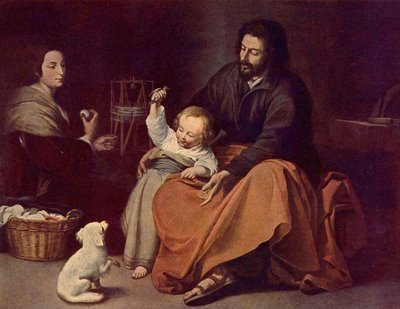
Yes, and so it is. When you are right and your spouse is wrong, any time, there remains the option for you to be right the "right way", not be right the "wrong way". (See previous post.) By being right the "right way", you respond to injustice or falsehood with dignity, not give up your dignity and bring you both down.

In a moment, a moment when you are right and your spouse is wrong, you are the "anchor" for the relationship, the marriage. You are the one, between the two of you, who God has in that moment handed personal responsibility and moral authority to, by your very position of being the one right, and your spouse being the one wrong. Thus you are required to lead the two of you in that morality given you that was handed you with calmness, understanding and patience.

You must allow your spouse to be wrong at times.

A different way of thinking says, "But if I keep letting him do this, he or she will never change!"

But have you ever stopped to ask yourself "Why does my loved one keep doing the same thing that's wrong over and over?

Well, it is psychologically relevant that you consider that when a person in your family keeps being wrong the same way over and over, and you can't seem to make the wrong behavior stop, it is possible that your family member "needs" to be wrong because "being wrong" is the first step to "being right" and "facilitating change!"

Yet you might reply, "But I have "told" him and I have "told" him over and over. Still he will not listen to me!!!" ... "I could talk until I'm ‘blue in the face', but it accomplishes nothing!!!"

Well, this is a critical question isn't it, "When you were right in what you said to him, did you say what was right in anger or impatience? Has there ever been rage, threats or insults from you on this precise wrong he or she keeps doing? If so, then perhaps your being right the wrong way, is what stands in the path of your husband or wife proceeding in the process of making that wrong behavior better.

You see, people do not like being "told" what to do. We humans are so tempted to do the "opposite" of what we're told, when what we're told (although right) is said in anger, rage, impatience and threats.

Even Christ did not force His will on people. But He was patient and kind.

"But my husband was impatient with me first!" you say ... "But my wife seems so cold and angry, what else am I to do but defend myself and insist I'm right??!!!"

That's the central point isn't it. "What to do when the other person is wrong first."

Well, in the Sermon On the Mount Christ said:

"... if you bring your gift to the altar, and there remember that your brother has something against you, leave your gift there before the altar, and go your way. First be reconciled to your brother, and then come and offer your gift." (Matthew 5:23-24)

What is amazing this is what Christ "didn't" say. He "didn't say" to leave your gift at the altar, then go reconcile "if what your brother has against you is relevant, "makes sense" or is "correct" in having something against you."

You see, "Love... suffers long and is kind, ... does not behave rudely, does not seek its own, is not provoked, thinks no evil, ... bears all things, believes all things, hopes all things, endures all things. Love never fails." (I Corinthians: 4, 5, 7, 8 (a))

Yet, you might say, "But my husband (or wife) was impatient with me first!" ... "Does this mean he (she) does not love me????"

Absolutely not. When your husband or wife is wrong in something, that only means he or she is weak, "Not That He Or She Does Not Love You!!!. Be it a reaction, a word, an action, a decision ... your husband or wife is the one between the two of you who is at that time most "weak", that is all. ..... Let it happen. ..... It is necessary. And don't worry, there will be your turn to be the one weak, thus wrong. You will need the strength reciprocated in the marriage.

Your spouse needs to be wrong sometimes. (And I mean husband "and" wife.) When it happens (and it will), don't worry, it will be your turn to be wrong and weak another time. For now though, be right graciously.

Remember, in marriage, the two of you are ONE. Nothing has really happened BAD until "both" of you act badly. Too easily, however, negativity can escalate, then the two in marital bond can spiral downward.

It is only in responding correctly, thus patiently, that your being "right" brings balance, even veneration, to your mate's experience of wrong. For just as it takes "two" to argue, it especially takes "two" to "continue" the argument. Thus one can choose, while being right, to be right calmly.

You cannot be your spouse's conscience. As you try to be his (or her) conscience, you will actually accomplish the opposite. Remember, he or she must be wrong first, in simple or big things, before being right through hearing the small, still voice of God.


"Father, grant me the peace and strength to be the one who is strong and gracious if I must in my marriage today. Remind me in your mercy, that I will often need such kindness as well."

Saturday

When You Are Right, And Your Spouse Is Wrong


"There is more hunger for love and appreciation in this world than for bread."

Mother Teresa of Calcutta (Albanian born Indian Missionary and Founder of the Order of the Missionaries of Charity. Nobel Prize for Peace in 1979. 1910-1997)

************

No, really, I'm not joking. "What about the times you are 'right", and your husband or wife is 'wrong'?" It "does" happen you know. Let's admit that. Sometimes you are right and the one you are married to is wrong. Maybe "too" often, and "too" wrong. Or so it seems. Honestly, it seems that way. Right??!!!

After reading WHAT CATHOLICS BELIEVE (PART ONE), you see that everything that's basic to Christian marriage is spelled out remarkably in the Catholic Catechism ("Part Two" is coming soon). However, there's another step in our process of assimulating truth which can be referred to as Catholic Psychology. That is: "When you are 'right' and the other person is 'wrong', if your response to that other person's 'wrong' is 'also wrong', then you are no longer 'right', but you have become 'more wrong' than the 'wrong' the other person was 'wrong' with, because you used the position of being 'right" to get there!"

"Remember, when our Lord was in the flesh on earth, He was continually merciful, understanding and forgiving to "everyone", but not with the "Scribes and Pharisees" who used their position and knowledge of being "right", to make themselves appear better than others while they did so in sarcasm impatience and anger. ... And wow, was Christ ever angry with them!!!!!

You see, when you as a husband or wife are "right", and your husband or wife is "wrong", how do you think you arrived to being "right" in the first place??? Do you think your "being right" comes from your own superior skill of reasoning?"

No. ... Do not be mistaken. ... If you are "right" and your husband or wife is "wrong", you are in the position of being "right" because "being right" was given to you by God. He chose "you" to be the one who would be "right" this time. And it is "He" who makes you and the one you love ONE, and continues to do so as He promised!

How otherwise will a marriage grow in understanding and loving service to our Lord? The only way a marriage can survive and flourish in this world of confusion, is that when one of the two in the marriage is "wrong", the other is not only "right", but "stays right".

You see, it is "inevitable" that in the experiences of home life, wrong words will be said, wrong actions will be taken. It is absloutely certain that in instances, wrong feelings will be felt, and wrong thoughts will be thought. But you and the person you married are "ONE", not "Two". So how does "one" that once was "two" grow and become more than they ever would have been alone???!!!

Well, not to be silly here, but it is as if the two of you will practically "take turns being wrong!" And you will each be wrong in ways each will not recognize in the moment, accept by the help of the other (and by God).

Admit it, you are "both" wrong through various times of day and night, and then, when you insist you are "right", that is when you are the "most wrong", because your being "right" is done in "anger" and "self-righteousness" (The very things Christ hates).

See clearly, isn't it sometimes the case that a husband is strong and the wife is weak? Aren't there occasions when the wife is strong and the husband is weak? Then surely you do not believe you are strong "all" the time, and the one you are ONE with is weak "continuously!!!" ... No, first one will be "weak", and thus wrong", then the other will be "strong, and thus right". This deep marital experience, our vocation to God, will manifest into a host of varitable patterns, and that, because the two human-beings of opposite genders are no longer "two" but "ONE!"

As the apostle Paul wrote:

"For we do not wrestle against flesh and blood, but against principalities, against powers, against the rulers of the darkness of this age, against spiritual hosts of wickedness in the heavenly places." (Ephesians: 6:12)

There are pressures, tensions, responsibilities, temptations and misunderstandings that are common to marriage, but are not entirely common in singleness. When you are married with the potential of bringing offspring of souls into the world to be children of God for all of eternity, there are entities and powers greater than mere psychology or what you "think", that wish to destroy you and your sacred marital bond.

More about this later, but for now I ask you, "How can your husband or wife recover from the traumatic, complicated, physically exhausting experience of being wrong (on any level), if you insist on making that situation an opportunity to prove that you are 'more right'?"

Say what you have to say, then say no more. Don't make things worse than it already is. God is ONE with the two of you. Because of that marital trinity (God, husband, wife), then this person you share marital vows with will change something that is necessary to change, because after making your statement, you then step back so God can speak and the other can hear God speak without distraction.

Book of Proverbs

(Psychological Scripture Verses:)

" To know wisdom and instruction. to perceive the words of understanding, to receive the instruction of wisdom, justice, judgment, and equity; to give prudence to the simple, to the young man knowledge and discretion - a wise man will hear and increase learning, and a man of under-standing will attain wise counsel, to understand a proverb and an enigma, the words of the wise and their riddles. The fear of the Lord is the beginning of knowledge, but fools despise wisdom and instruction." (1:2-7)

"My son, hear the instruction of your father, and do not forsake the law of your mother; for they will be a graceful ornament on your head, and chains about your neck." (1:8-9)

" For the Lord gives wisdom; from His mouth come knowledge and understanding; He stores up sound wisdom for the upright; He is a shield to those who walk uprightly; He guards the paths of justice, and preserves the way of His saints. Then you will understand righteousness and justice, equity and every good path. When wisdom enters your heart, and knowledge is pleasant to your soul, discretion will preserve you; understanding will keep you." (2:6-11)

"Trust in the Lord with all your heart, and lean not on your own understanding; in all your ways acknowledge Him, and He shall direct your paths." (3:5-6)

"Do not be wise in your own eyes; fear the Lord and depart from evil. It will be health to your flesh, and strength to your bones."
(3:7-8)

"Happy is the man who finds wisdom, and the man who gains understanding; for her proceeds are better than the profits of silver, and her gain than fine gold. She is more precious than rubies, and all the things you may desire cannot compare with her. Length of days is in her right hand, in her left hand riches and honor. Her ways are ways of pleasantness, and all her paths are peace. She is a tree of life to those who take hold of her, and happy are all who retain her." (3:13-18)

"When you lie down, you will not be afraid; yes, you will lie down and your sleep will be sweet. Do not be afraid of sudden terror. Nor of trouble from the wicked when it comes; for the Lord will be your confidence, and will keep your foot from being caught." (3:24-26)

"Do not envy the oppressor, and choose none of his ways; for the perverse person is an abomination to the Lord, but His secret counsel is with the upright." (3:31-32)

"Keep your heqrt with all diligence, for out of it spring the issues of life." (4:23)

"For the lips of an immoral woman drip honey, and her mouth is smoother than oil; but in the end she is bitter as wormwood, sharp as a two-edged sword." (5:3-4)

"Drink water from your own cistern, and running water from your own well. Should your fountains be sispersed abroad, streams of water in the streets? Let them be only your own, and not for strangers with you. Let your fountain be blessed, and rejoice with the wife of your youth. As a loving deer and a graceful doe, let her breasts satisfy you at all times; and always be enraptured with her love." (5:15-19)

"These six things the Lord hates, yes, seven are an abomination to Him: A proud look, a lying tongue, hands that shed innocent blood, a heart that devises wicked plans, feet that are swift in running to evil, a false witness who speaks lies, and one who sows discord among brethren." (6:16-19)

"Reproofs of instruction are the way of life. To keep you from the evil woman, from the flattering tongue of a seductress. Do not lust after her beauty in your heart, nor let her allure you with her eyelids. For by means of a harlot a man is reduced to a crust of bread; and an adulteress will prey upon his precious life." (6:23[b]-26)

"Can a man take fire to his bosom, and his clothes not be burned? Can one walk on hot coals, and his feet not be seared? So is he who goes in to his neighbor's wife; whoever touches her shall not be innocent." (6:27-29)

"Whoever commits adultery with a woman lacks understanding; he who does so destroys his own soul. Wounds and dishonor he will get, and his reproach will not be wiped away." (6:32-33) "Do not let your heart turn aside to her ways, do not stray into her paths; for she has cast down many wounded, and all who were slain by her were strong men." (7:25-26)

"I, wisdom, dwell with prudence, and find out knowledge and discretion. The fear of the Lord is to hate evil; pride and arrogance and the evil way and the perverse mouth I hate. Counsel is mine, and sound wisdom; I am understanding, I have strength." (8:12-14) "... he who sins against me wrongs his own soul; all those who hate me love death." (8:36)

"He who corrects a scoffer gets shame for himself, and he who rebukes a wicked man only harms himself. Do not correct a scoffer, lest he hate you; rebuke a wise man, and he will love you. Give instruction to a wise man, and he will be still wiser; teach a just man, and he will increase in learning." (9:7-9)

"If you are wise, you are wise for yourself, and if you scoff, you will bear it alone." (9:12)

"A wise son makes a glad father, but a foolish son is the rief of his mother." (10:1)

"Hatred stirs up strife, but love covers all sins." (10:12)

"In the multitude of words sin is not lacking, but he who restrains his lips is wise." (10:19)

"He who is devoid of wisdom despises his neighbor, but a man of understanding holds his peace." (11:12)

"Where there is no counsel, the people perish; but in the multitude of counselors there is safety." (11:14)

"The merciful man does good for his own soul, but he who is cruel troubles his own flesh." (11:17)

"As a ring of gold in a swine's snout, so is a lovely woman who lacks discretion." (11:22)

"An excellent wife is the crown of her husband, but she who causes shame is like rottenness in his bones." (12:4)

"The thoughts of the righteous are right, but the counsels of the wicked are deceitful." (12:5)

"A righteous man regards the life of his animal, but the tender mercies of the wicked are cruel." (12:10)

"The wicked is ensnared by the transgression of his lips, but the righteous will come through trouble. A man will be satisfied with good by the fruit of his mouth." (12:13-14)

"The way of a fool is right in his own eyes, but he who heeds counsel is wise. A fool's wrath is known at once, but a prudent man covers shame." (12:16)

"... There is one who speaks like the piercings of a sword, but the tongue of the wise promotes health." (12:17[b]-18)

"The truthful lip shall be established forever, but a lying tongue is but for a moment." (12:19)

"Deceit is in the heart of those who devise evil, but counselors of peace have joy." (12:20)

"Lying lips are an abomination to the Lord, but those who deal truthfully are His delight." (12:22)

"Anxiety in the heart of man causes depression, but a good word makes it glad." (12:25)

"The righteous should choose his friends carefully, for the way of the wicked leads them astray." (12:26)

"He who guards his mouth preserves his life, but he who opens wide his lips shall have destruction." (13:3)


"There is one who makes himself rich, yet has nothing; and one who makes himself poor, yet has great riches." (13:7)

"By pride comes nothing but strife, but with the well-advised is wisdom." (13:10)

"Poverty and shame will come to him who disdains correction, but he who regards a rebuke will be honored." (13:18)

"He who walks with wise men will be wise, but the companion of fools will be destroyed." (13:20)

"He who spares his rod hates his son, but he who loves him disciplines him promptly." (13:24)

"The wise woman builds her house, but the foolish pulls it down with her hands." (14:1)

"Go from the presence of a foolish man, when you do not perceive in him the lips of knowledge." (14:7)

"There is a way that seems right to a man, but its end is the way of death." (14:12)

"A quick-tempered man acts foolishly, ..." (14:17[a])

"In the fear of the Lord there is strong confidence, and His children will have a place of refuge." (14:26)

"He who is slow to wrath has great understanding, but he who is impulsive exalts folly." (14:29)

"A soft answer turns away wrath, but a harsh word stirs up anger. The tongue of the wise uses knowledge rightly, but the mouth of fools pours forth foolishness." (15:1-2)

"A wholesome tongue is a tree of life, but perverseness in it breaks the spirit." (15:4)

"Better is a little with the fear of the Lord, than great treasure with trouble. Better is a dinner of herbs where love is, than a fatted calf with hatred." (15:16-17)

"A wrathful man stirs up strife, but he who is slow to anger allays contention." (15:18)

"A wise son makes a father glad, but a foolish man despises his mother." (15:20)

"Without counsel, plans go awry, but in the multitude of counselors they are established." (15:22)

"The light of the eyes rejoices the heart, and a good report makes the bones healthy." (15:30)

"The fear of the Lord is the instruction of wisdom, and before honor is humility." (15:33)

"All the ways of a man are pure in his own eyes, but the Lord weighs the spirits." (16:2)

"Commit your works to the Lord, and your thoughts will be established." (16:3)

"When a man's ways please the Lord, He makes even his enemies to be at peace with him." (16:7)

"Pride goes before destruction, and a haughty spirit befor a fall." (16:18)

"Pleasant words are like a honeycomb, sweetness to the soul and health to the bones." (16:24)

"A perverse man sows strife, and a whisperer separates the best of friends. A violent man entices his neighbor, and leads him in a way that is not good, he winks his eye to devise perverse things; he purses his lips and brings about evil." (16:27-30)

"He who is slow to anger is better than the mighty, and he who rules his spirit than he who takes a city." (16:32)

"Better is a dry morsel with quietness, than a house full of feasting with strife." (17:1)

"The refining pot is for silver and the furnce for gold, but the Lord tests the hearts." (17:3)

"He who covers a transgression seeks love, but he who repeats a matter separates friends." (17:9)

"Let a man meet a bear robbed of her cubs, rather than a fool in his folly." (17:12)

"The beginning of strife is like releasing water; therefore stop contention before a quarrel starts." (17:14)

"A friend loves at all times, and a brother is born for adversity." (17:17)

"A merry heart does good, like medicine, but a broken spirit dries the bones." (17:22)

"A foolish son is a grief to his father, and bitterness to her who bore him." (17:25)

"He who has knowledge spares his words, and a man of understanding is of a calm spirit. Even a fool is counted wise when he holds his peace; when he shuts his lips, he is considered perceptive." (17:27-28)

"It is not good to show partiality to the wicked, or to overthrow the righteous in judgment." (18:5)

"A fool's mouth is his destruction, and his lips are the snare of his soul." (18:7)

"The words of a talebearer are like tasty trifles, and they go down into the inmost body."" (18:8)

"He who answers a matter before he hears it, it is folly and shame to him." (18:13)

"The spirit of man will sustain him in sickness. ..." (18:14[a])

"The first one to plead his cause seems right, until his neighbor comes and examines him." (18:17)

"A brother offended is harder to win than a strong city, and contentions are like the bars of a castle." (18:19)

"Death and life are in the power of the tongue." (18:21[a])

"He who finds a wife finds a good thing, and obtains favor from the Lord." (18:22)

"A man who has friends must himself be friendly, but there is a friend who sticks closer than a brother. (18:24)

"He who gets wisdom loves his own soul; he who keeps understanding will find good." (19:8)

"The discretion of a man makes him slow to anger, and his glory is to overlook a transgression." (19:11)

"A foolish son is the ruin of his father, and the contentions of a wife are a continual dripping." (19:13)

"Houses and riches are an inheritance from fathers, but a prudent wife is from the Lord." (19:14)

"Chasten your son while there is hope, and do not set your heart on his destruction." (19:18)

"A man of great wrath will suffer punishment; for if you rescue him, you will have to do it again." (19:19)

"Listen to counsel and receive instruction, that you may be wise in your latter days." (19:20)

"There are many plans in a man's heart, nevertheless the Lord's counsel - that will stand." (19:21)

"What is desired in a man is kindness." (19:22[a])

"He who mistreats his father and chases away his mother is a son who causes shame and brings reproach." (19:26)

"Wine is a mocker, strong drink is a brawler, and whoever is led astray by it is not wise." (20:1)

"It is honorable for a man to stop striving, since any fool can start a quarel." (20:3)

"Counsel in the heart of man is like deep water, but a man of understanding will draw it out." (20:5)

"Most men will proclaim each his own goodness, but who can find a faithful man?" (20:6)

"Who can say, 'I have made my heart clean, I am pure from my sin'"? (20:9)

"There is gold and a multitude of rubies, but the lips of knowledge are a precious jewel." (20:15)

"Bread gained by deceit is sweet to a man, but afterward his mouth will be filled with gravel." (20:17)

"He who goes about as a talebearer reveals secrets; therefore do not associate with one who flatters with his lips." (20:20)

"Whoever curses his father or his mother, his lamp will be put out in deep darkness." (20:20)

"An inheritance gained hastily at the beginning will not be blessed at the end." (20:21)

"Do not say, "I will recompense evil"; wait for the Lord, and He will save you." (20:22)

"A man's steps are of the Lord; how then can a man understand his own way?" (20:24)

"It is a snare for a man to devote rashly something as holy, and afterward to reconsider his vows." (20:25)

"The spirit of a man is the lamp of the Lord, searching all the inner depths of his heart." (20:27)

"The glory of young men is their strength, and the splendor of old men is their gray head." (2029)

"Every way of a man is right in his own eyes, but the Lord weighs the hearts." (21:2)

"Getting treasures by a lying tongue is the fleeting fantasy of those who seek death." (21:6)

"Better to dwell in a corner of a housetop, than in a house shared with a contentious woman." (21:9)

"A gift in secret pacifies anger, and a bribe behind the back strong wrath." (21:14)

"Better to dwell in the wilderness, than with a contentious and angry woman." (21:19)

"Whoever guards his mouth and tongue keeps his soul from troubles." (21:23)

"The horse is prepared for the day of battle, but deliverance is of the Lord." (21:31)

"A good name is to be chosen rather than great riches, loving favor rather than silver and gold." (22:1)

"By humility and the fear of the Lord are riches and honor and life." (22:4)

"Train up a child in the way he should go, and when he is old he will not depart from it." (22:6)

"Cast out the scoffer, and contention will leave; yes, strife and reproach will cease." (22:10)

"Have I not written to you excellent things of counsels and knowledge, that I may make you know the certainty of the words of truth, that you may answer words of truth to those who send to you?" (22:20-21)

"Make no friendship with an angry man, and with a furious man do not go, lest you learn his ways and set a snare for your soul." (22:24-25)

"Do not overwork to be rich; because of your own understanding, cease!" (23:4)

"Do not eat the bread of a miser, nor desire his delicacies; for as he thinks in his heart, so is he. 'Eat and drink!' he says to you, but his heart is not with you. The morsel you have eaten, you will vomit up, and waste your pleasant words." (23:6-8)

"Do not speak in the hearing of a fool, for he will despise the wisdom of your words." (23:9)

"Do not let your heart envy sinners, but be zealous for the fear of the Lord all the day; for surely there is a hereafter, and your hope will not be cut off." (23:17-18)

"Listen to your father who begot you, and do not despise your mother when she is old." (23:22)

"The father of the righteous will greatly rejoice, and he who begets a wise child will delight in him. Let your father and your mother be glad, and let her who bore you rejoice." (23:24-25)

"My son, give me your heart, and let your eyes observe my ways. For a harlot is a deep pit, and a seductress is a narrow well. She also lies in wait as for a victim. And increases the unfaithful among men." (23:26-28)

"Who has woe? Who has sorrow? Who has contentions? Who has complaints? Who has wounds without cause? Who has redness of eyes? Those who linger long at the wine, those who go in search of mixed wine. Do not look on the wine when it is red, when it sparkles in the cup, when it swirls around smoothly; at the last it bites like a serpent, and stings like a viper. Your eyes will see strange things, and your heart will utter perverse things. Yes, you will be like one who lies down in the midst of the sea, or like one who lies at the top of the mast, saying: 'They have struck me, but I was not hurt; they have beaten me, but I did not feel it, when shall I awake, that I may seek another drink?" (23:29-35)

"A wise man is strong, yes, a man of knowledge increases strength; for by wise counsel you will wage your own war, and in a multitude of counselors there is safety." (24:5-6)

"If you faint in the day of adversity, your strength is small." (24:10)

"My son, eat honey because it is good, and the honeycomb which is sweet to your taste; so shall the knowledge of wisdom be to your soul;" (24:13-14[a])

"... a righteous man may fall seven times and rise again, but the wicked shall fall by calamity." (24:16)

"Do not rejoice when your enemy falls, and do not let your heart be glad when he stumbles; lest the Lord see it, and it displease Him, and He turn away His wrath from him." (24:17-18)

"It is not good to show partiality in Judgment." (24:23[b])

"He who gives a right answer kisses the lips." (24:26)

"Do not say, 'I will do to him just as he has done to me; I will render to the man according to his work." (24:29)

"It is the glory of God to conceal a matter." (25:2)

"A word fitly spoken is like apples of gold in settings of silver, like an earring of gold and an ornament of fine gold is a wise rebuker to an obedient ear." (25:11-12)

"A man who bears false witness against his neighbor is like a club, a sword, and a sharp arrow." (25:18)

"Confidence in an unfaithful man in time of trouble is like a bad tooth and a foot out of joint." (25:19)

"It is better to dwell in a corner of a housetop, than a house shared with a contentious woman." (25:24)

"Whoever has no rule over his own spirit is like a city broken down, without walls." (25:28)

"Do not answer a fool according to his folly, lest you also be like him." (26:4)

"Do you see a man wise in his own eyes? There is more hope for a fool than for him." (26:12)

"The lazy man is wiser in his own eyes than seven men who can answer sensibly." (26:16)

"He who passes by and meddles in a quarrel not his own is like one who takes a dog by the ears." (26:17)

"Like a madman who throws firebrands, arrows, and death, is the man who deceives his neighbor, and says, 'I was only joking!'" (26:18-19)

"Where there is no wood, the fire goes out; and where there is no talebearer, strife ceases. As charcoal is to burning coals, and wood to fire, so is a contentious man to kindle strife." (26:20-21)

"He who hates, disguises it with his lips, and lays up deceit within himself; when he speaks kindly, do not believe him, for there are seven abominations in his heart; though his hatred is covered by deceit, his wickedness will be revealed before the assembly." (26:24-26)

"A lying tongue hates those who are crushed by it, and a flattering mouth works ruin." (26:28)

"Let another man praise you, and not your own mouth; a stranger, and not your own lips." (27:2)

"A stone is heavy and sand is weighty, but a fool's wrath is heavier than both of them." (27:3)

"Wrath is cruel and anger is torrent, but who is able to stand before jealousy?" (27:4)

"Open rebuke is better than love carefully concealed." (27:5)

"Faithful are the wounds of a friend, but the kisses of an enemy are deceitful." (27:6)

"Ointment and perfume delight the heart, and the sweetness of a man's friend gives delight by hearty counsel." (27:9)

"He who blesses his friend with a loud voice, rising early in the morning, it will be counted a curse to him." (27:14)

"A continual dripping on a very rainy day and a contentious woman are alike; whoever restrains her restrains the wind, and grasps oil with his right hand." (27:15-16)

"As in water face reflects face, so a man's heart reveals the man." (27:19)

"Though you grind a fool in a mortar with a pestle along with crushed grain, yet his foolishness will not depart from him." (27:22)

"The wicked flee when no one pursues, but the righteous are bold as a lion." (28:1)

"Evil men do not understand justice, but those who seek the Lord understand all." (28:5)

"Better is the poor who walks in his integrity than one perverse in his ways, though he be rich." (28:6)

"Whoever causes the upright to go astrain in an evil way, he himself will fall into his own pit;" (28:10)

"Whoever robs his father or his mother, and says, 'It is no transgression,' the same is companion to a destroyer." (28:24)

"He who is of a proud heart stirs up strife, ..." (28:25[a])

"He who is often rebuked, and hardens his neck, will suddenly be destroyed, and that without remedy." (29:1)

"If a wise man contends with a foolish man, whether the fool rages or laughs, there is no peace." (29:9)

"A fool vents all his feelings, but a wise man holds them back." (29:11)

"The rod and rebuke give wisdom, but a child left to himself brings shame to his mother." (29:15)

"Correct your son, and he will give you rest; yes, he will give delight to your soul." (29:17)

"Do you see a man hasty in his words? There is more hope for a fool than for him." (29:20)

"An angry man stirs up strife, and a furious man abounds in transgression." (29:22)

"The fear of man brings a snare, but whoever trusts in the Lord shall be safe." (29:25)

"There is a generation that curses its father, and does not bless its mother. There is a generation that is pure in its own eyes, yet is not washed from its filthiness." (30:11-12)

"This is the way of an adulterous woman; she eats and wipes her mouth, and says, 'I have done no wickedness.' (30:20)

"If you have been foolish in exalting yourself, or if you have devised evil, put your hand on your mouth. For as the churning of milk produces butter, and wringing the nose produces blood, so the forcing of wrath produces strife." (30:32-33)

"Who can find a virtuous wife? For her worth is far above rubies. The heart of her husband safely trusts her; so he will have no lack of gain. She does him good and not evil all the days of her life." (31:10-12)

"Charm is deceitful and beauty is passing, but a woman who fears the Lord, she shall be praised. Give her of the fruit of her hands, and let her own works praise her in the gates." (31:30-31)