 Once upon a time there was a family who lived in a beautiful house. The family had lots of the material things that many people think are important for contentment. The family, however, was not contented. With one misunderstanding and another, the situation grew worse and worse. Nobody would give way an inch in their bitter arguments, until at last the family's love turned to hate. Finally certain ones in the family insisted that inside the house they would build brick walls to divide other family members. Each went his and her own way, and each never spoke to the others again as long as they lived. The family had many wretched years in their isolation.
Today's Reminder 
Am I unknowingly building walls between myself and the people in my family? Are the walls being made of stubbornness, self-will, self-righteousness and a desire to punish? Such walls can be as hard and unyielding as though they were made of real bricks. It would leave me no space in which to grow.
"God grant me the wisdom to recognize the faults I am building into walls, such walls as cannot be penetrated even by love."
[Taken and fashioned from "One Day At A Time In Al-Anon
for general family relationships by Jim Hogue, MA, MFTI]
Wednesday
Building Emotional Walls

Sunday
Depression & Suicide
 He was about 7 years old. It was after dinner, and the evening sun of midsummer still hung low in the sky. Suddenly, he ran into the house and threw himself onto his bed, crying, saying, over and over through his tears, “I wish I were dead.”
Dr. Raymond Lloyd Richmond continues to write: ... As I look back on this event, I can now also recall the rest of the story. My mother had denied me something I wanted (though what it was is long forgotten), I felt unrecognized and unloved, and I was angry at her. In my mind, I began to wish she were dead—but only for a split second, because on the edge of consciousness it occurred to me that if she were to die, I would have no mother and that I would be left all alone in the world with no one to take care of me. So my mind quickly turned away from that wish for her death, with all of it’s lonely implications, and, feeling quite guilty about the whole thing, I began to wish for my own death. After all, what kind of a person could be so dependent on someone else, so helpless and afraid? A no good piece of nothing, that’s who, and he deserves to die.
In psychological terms, I repressed my anger for my mother and ended up turning my frustration against myself. The proverb “Don’t bite the hand that feeds you” sums this up nicely. It’s a terrible bind for a child. And, if it happens often enough, it can prevent the child from being able to express emotions appropriately—because with every angry thought comes the fear of losing someone’s love or protection.
In my own life, beginning with my psychoanalysis as a student, I have had to come to terms with this event and how it has affected my life. I, like many of my own patients, have been forced as an adult to learn how to come to terms honestly with feelings of insult and hurt.
Now, the fleeting suicidal fantasy that I encountered in that moment of childhood frustration was not a clinical case of suicidal depression. Nevertheless, in my professional experience I have seen the dynamic of suppressed anger as a major motive behind clinical depression, and ultimately, as the unconscious motive for serious suicidal thoughts. Someone close to you hurts you, and “Don’t bite the hand that feeds you” kicks in from childhood. Fearing the loss of that person’s love, you keep silent about your feelings and ultimately—as a way to escape the guilt of your dependency—you begin wishing for your own destruction. (Which, as an adult, you actually have the power to bring about.)
But there is one other element to the process.
It isn’t just that a person fails to communicate with others honestly. If you are hurt often enough, in keeping silent about it, and in feeling guilty about being so dependent on someone’s love, you can begin to believe not just that you are unloved but that you are despised. If you ever reach this point you then seemingly become a “partner” in your own destruction.
In fact, some persons will even kill themselves to avoid admitting that their parents did not love them—that is, that the parents did not acknowledge the child’s individual needs with true love.
Has anyone ever pushed you away when you wanted to be held? Has anyone ever given more attention to a bottle of alcohol than to you? Has anyone ever laughed at you when you were hurt? Has anyone ever told you that you were too dumb to succeed? Has anyone ever refused you help when you asked for it? Do you get the idea? No one may have actually told you to kill yourself, but all these sorts of behavioral cues give a clear impression: “You are of no importance to me.” “I have no concern for you.” “You’re not special.” “You don’t deserve to be alive.” “You are garbage.”
So, to the “Other,” you (and all of us, for that matter) are just an object to be manipulated to satisfy someone else. It’s a losing game to try to make the “Other” love you. It’s a losing game to make the “Other” say you’re special. Sure, you can try to do all the right things, like drink the right brand of cola, eat at the right fast-food place, wear the right jeans, expose all the right pieces of flesh, pierce and tattoo yourself in the right places, use the right lingo, work for the right company—but once you slip up, then it’s the garbage can for you.
Thus you can “tune in” to the resentment of others subliminally, and, if you’re not psychologically aware, you can come to believe that these perceptions you receive from others are truth and reality about your personal value—or lack of it.
I’m not trying to tell you here that no one feels affection for you. You can argue all you want that you r mother and father care about you somehow, and I won’t object, because on some level they do care about you. The real point is that many persons who claim to care about you also give indications, through behaviors and things they say and think, that their affection for you is mixed with resentment. Thus, instead of teaching you how to love by the example of true love, they “infect” you emotionally with a fear of love. It’s not pretty to see this directly, so that’s why you have defenses that blind you to it. But it’s real. At the core, that’s where suicidal feelings originate. Not that anyone is necessarily literally wishing you to die, but that the feeling of resentment that they project can get so strong that you end up feeling like garbage. And from there it is only one small step to make yourself garbage.
So, once your psychotherapy drags you through the pain of this realization about human nature—and you accept it all without defense and resistance—you will then have the strength to “see through” the illusions of the “Other” and claim your own right to exist.
(For the above quote, go to Depression And Suicide by Dr. Raymond Lloyd Richmond.)
Thursday
Last Rites / Anointing of the Sick
This is a beautiful story by Aimee Milburn of Historical Christian, regarding her brother Mark, his death, and how the Catholic Sacrament of "Last Rites" played such a vital role in both of their lives. In her own words she writes the following:
Mark was born just 17 months ahead of me, and we grew up together, one grade apart in school. We fought like cats and dogs when we were little, but by the time we got into high school we realized we could be allies against mom and dad, and became friends.
It was a pretty free-wheeling time, the sexual revolution was in full swing, and I decided I was a liberated feminist, and my brother decided he was gay. We both embarked on our respective free-wheeling lifestyles, my brother plunging into the gay lifestyle. We traded stories with each other, commiserated about relationships, went dancing together when we got old enough to get into clubs, and traveled together. We really had some adventures, and I loved my brother dearly.
This was before anybody had heard of AIDS, but within a few years we did hear about it. And one Christmas afternoon I received a phone call I will never forget: my brother, telling me he had contracted the virus. I was 25. I knew my brother had just received a death sentence. I cried that night like I’d never cried before.
As it turns out, my brother was a long-term survivor, lived 15 years with the disease. During those years I lived in different parts of the country, but we stayed in touch, carried on long talks on the phone, and always sent each other $20 on our birthdays. One year I received a $20 bill on which he had written, “This is the $20 bill we always exchange on our birthdays.” I kept it, still have it packed away somewhere.
I always told my brother during those years that if he really got sick and it looked like the end was coming, I’d move back and help him, and be with him when he died. He managed to stay somewhat healthy for several years, with the help of drugs and good diet, but gradually he declined. He went on full disability for a few more years, but hated it, so developed hobbies to stay busy. He turned his entire front yard into a flower garden, filling it with rose bushes and giant sunflowers and all kinds of other flowers. He filled his apartment with plants and aquariums.
Finally, one day I got a call from my parents that Mark had gone into a real decline, and it wasn’t clear how long he would last. I was living in Seattle, a place I loved with a job and a community I loved, but I resigned the job and moved back home, to help my brother and be with him when he died, as I always said I would.
Continue reading "The Death of my Brother, and Hope" »
Sunday
Pick-&-Choose Cafeteria Catholics (#2)
I hope the readers of "Catholic Psychology Blogspot" realize the relevance of humor in the past two posts. However, we must agree we are discussing a very serious issue here. There were generations once referred to as "Baby Boomers". Then there was the "Love" generation. Some how what resulted from that was "Generation X", then finally "Generation Me"!
Let's examine ourselves carefully. In so many ways, and on so many levels, much of what we say and do can rotate solely around ourselves, and it is possible we won't even know it. This is a sobering thought if we will think about it in connection to our individual lives.
It is like this question I will now ask you. ... "Of all the creatures in the world, what is the one creature that does not know of the existence of water?" ... The answer to that question in many cases is the "fish". Often it is the "fish" that "does not know of the existence of water!" ... The reason many fish do not know of there is water, is because the fish is immersed in water constantly, thus fails to realize water exists!!!
This cannot be said regarding a "deer" for example. The deer definitely "knows" there is "water", and knows where to go get water when it needs it. When the deer is thirsty, the deer walks to the edge of a pond, bends down, then drinks from the pond which contains water. ... Being separat socially at times with the water, a deer has a profound consciousness of water! The deer realizes itself as a separate entity from water itself, and can thus go to water to drink it, or can choose not to on occasion.
This cannot be easily said for we humans in our relationship with selfishness. We people at this point of what has become a narcissistic generation. Truly "Generation Me".
In a highly technological age we are so surrounded, so immersed in selfishness in all fabrics of culture around us, that we can easily fail to see ourselves as self centered in what we do with our time, how we make our decisions, and how we honestly conduct ourselves in our personal relationships. Even doing something sacrificial for someone else, can interestingly turn out to be more for our own selfish desires, than than to be truly sacrificial for the interest of a person we say we are doing a thing for.
This is a psychological frame of mind, a process of thinking and feeling in relation to the world around us, that robs us of what we can do and be as Christians, thus Catholics, in service to our God who we say we truly believe in.
"And to the angel of the church of the Laodiceans write, 'These things says the Amen, the Faithful and True Witness, the Beginning of the creation of God: I know your works, that you are neither cold nor hot. I could wish you were cold or hot. So then because you are luke warm, and neither cold nor hot, I will vomit you out of My mouth. Because you say, 'I am rich, have become wealthy, and have need of nothing' - and do not know that you are wretched, miserable, poor, blind, and naked" ... "Behold, I stand at the door and knock. If anyone hears My voice and opens the door, I will come into him and dine with him, and he with Me." (Revelation 3:14-17, and 3:20)
Wednesday
The Psychology Of Seeking Poverty
.
Let us not be fooled. ... There is a Christian Psychology, thus a Catholic Psychology. Among others, we see it in St. Francis of Assisi. His father was a wealthy merchant, but St. Francis chose to leave his life of wealth to pursue utter devotion to Christ in poverty. Before Catholic religious, he stripped himself of his clothing and took on a poor man's garb to symbolize his devotion.
The Catholic Church was in need of reformation. That reformation happened not by protesting reformers, but by people like St. Francis of Assisi, who stayed in the Church and created change from the inside as a servant.
He had a dream that God wanted him to repair His Church. St. Francis saw an old church building, and thought this was what God wanted him to repair. He did so, but then realized that perhaps God meant more than simply this.
Then St. Francis asked to see the Pope. Arriving at his door, the man at the door would not let him in, because St. Francis looked like a beggar from the street. The Pope finally let him in, then knew God would use St. Francis to do that very thing. The Roman Catholic reformation that St. Francis influenced has continued to this day.
We do not all need seek utter poverty as powerful ministries to our Lord. However, the principle remains true and has great application in our modern time.
Do you find yourself misrepresented in the things you do and say for others? Are you sometimes taken advantage of in ways that are truly not fair? Is your husband, wife or children sometimes cruel or impatient with ? Does your employer take advantage, or place someone of less skill in your place? God wishes that the spirit that was in St. Francis of Assisi, also be in us who follow Him in these times of persecution. Persecution, although sometimes mild, remain very real none the less, and painful.
Remember what St. Paul wrote under inspiration of the Holy Spirit:
"Therefore I take pleasure in infirmities, in reproaches, in needs, in persecutions, in distresses, for Christ's sake. For when I am weak, then I am strong." (II Corinthians 12:10)
Tuesday
How To Deal With Change
In a world where it is believed there is no "right or wrong", think about it, it can be psychologically satisfying to know you are moving in the correct direction. That "knowing" you are moving in the right direction is not always related to how you "feel", neither is it necessarily dependant on what you might "think".
Sometimes "thinking" gets in the way. You know, our "busy-ness" of thought. Even sometimes we must ignore what we feel, not because God doesn't care about our feelings, but because feelings at times cloud our judgment. In many decisions of life this can be dangerous.
"If any of you lacks wisdom, let him ask of God, who gives to all liberally and without reproach, and it will be given to him. But let him ask in faith, with no doubting, for he who doubts is like a wave of the sea driven and tossed by the wind. For let not that man suppose that he will receive anything from the Lord; he is a double-minded man, unstable in all his ways. Let the lowly brother glory in his exaltation, but the rich in his humiliation, because as a flower of the field he will pass away." (James 1:5-10)
Friday
How To Love Your Family
Can I ask you a question? Actually two. The first question I wish to ask you is, "Do you think these things are true?" I mean, "The life of Christ as we know it to be through the words of the gospels in the Bible?" ... If your answer to the first question is "yes", then the second question I wish to ask you is, "Do you love Jesus?" - I mean, do you "really" love Jesus?
You see, if we love Jesus, and "really" love Him, then perhaps it is of great importance that we also love His "family".
Yes, I know, this "loving-the-family-of-Christ" can mean many things, and can be acted out on many levels. A few of which are:
(1) Loving the saints, brothers and sisters in the Lord who have gone on before us.
(2) Loving fellow believers, ... men, women and children, who are with us now on this earth at this time.
(3) Loving the family that Christ was born into when He was birthed in the flesh as an infant in Bethlehem.
It is to number "3" I wish to respond at this moment.
Yes, it is true the men and women in these videos only depict events as they believe them to have been at the time of Christ. Yet, there are many truths in the acting of these events by these dear people which are valid. That are personally true historically, because Christ, very God, took on flesh, and like us, dwelt among the human race in human form.
My point is this, "Catholic Psychology" that is particularly relevant for personal application in our modern day, is "To love Christ, the Trinity, and His Church through also loving the family within which Christ Himself was born into in the event of his initial infancy upon earth. I’m referring to our opportunity to discover a very real joyous relationship within the sacred emotional bond that existed and continues to exist between Jesus and His mother Mary.
Great passion was involved in these events for the sake of our salvation. And certainly, Jesus loved his mother, and she loved Him. There can be great healing and growth for you, the more you make real in your life, closeness in the family that included Jesus and His mother Mary. Feel yourself in that family. Share in that family. The beauty, the sacred. The easiness, joy and difficulties. The passion and the glory. ... Cry with them, and laugh with them. See what they see. Feel what they feel and grow by it. ... It is then when we find more to give to our families who are with us now on this earth.
Knowing since ancient times how the words "brother/sister" were culturally interchangeable with "cousins", and that Mary was loved by Jesus in ways that are commonly honorable between a son and his mother, view the following as an invitation for each of us to join intimately with that sacred family, Jesus and Mary, and personally apply that familial relationship to the desires of our hearts, as well as to the personal needs of others in our daily lives. (Together let’s say, "Jesus and Mary, our Lord and our Mother, we love you, and together we will share with you the sacred story of your most holy passion!!!")
"Then one said to Him, ‘Look, your mother and your brothers are standing outside, seeking to speak with You.’ But He answered and said to the one who told Him, ‘Who is My mother and who are My brothers?’ And He stretched out His hand toward His disciples and said, ‘Here are My mother and My brothers! For whoever does the will of My Father in heaven is My brother and sister and mother."
(Matthew 12:47-50)
Sunday
*How To Love A Woman*
"Complacency is an enemy, easy to recognize in others but difficult to admit in ourselves. It is rarely listed among the major human faults, yet it can hinder us in every form of personal growth. Complacency simply means being sure we're right, taking it for granted that our view couldn't possibly be wrong. It means judging others by what we think is right. It blocks out understanding and kindness, and justifies qualities in ourselves that we wouldn't find tolerable in other people. Smug complacency is often at the root of family dissension. ..."
"Let me not be quite so sure that my thinking is always correct. Let me begin by being a little critical of my iron resolution to have things my way. I will keep my ears and my mind open to the ideas of others, even when they don't square with mine. Then I'll be opening the door to growth. ..."
"My serenity does not depend on my winning every round in my battle with life. It does depend on my acceptance of others on their own terms. God grant me that serenity." ("One Day At A Time In Al-Anon", page 197)
"Husbands, love your wives, just as Christ also loved the church and gave Himself for her, that He might sanctify and cleanse her with the washing of water by the word, that He might present her to Himself a glorious church, not having spot or wrinkle or any such thing, but that she should be holy and without blemish. So husbands ought to love their own wives as their own bodies; he who loves his wife loves himself." (Ephesians 5:25-27)
Monday
*Early Church Psychology*
 So much for getting mad because your toaster stopped working this morning.
Or being "upset" and "holding a grudge" because someone spoke to you in the wrong tone of voice.
.
The above picture depicts a day when all Christians were Catholics. Just the mere "thought" of the Church dividing into factions in dispute against one another was deplorable and considered "heresy". ... How today we've grown accustomed to divisions and disagreements. Differences of opinion, or "Your-truth-being-your-truth,-and-my-truth-being-my-truth."
.
And then the world was without "psychology". ... Or was it?
.
** I beseech you therefore, brethren, by the mercies of God, that you present your bodies a living sacrifice, holy, acceptable to God, which is your reasonable service.
** And do not be conformed to this world, but be transformed by the renewing of your mind, that you may prove what what is that good and acceptable and perfect will of God.
** For I say, through the grace given to me, to everyone who is among you, not to think of himself more highly than he ought to think, but to think soberly, as God has dealt to each one a measure of faith.
** For as we have many members in one body, but all the members do not have the same function, so we, being many, are one body in Christ, and individually members of one another.
** Having then gifts differing according to the grace that is given to us, let us use them; if prophecy, let us prophesy in proportion to our faith; or ministry, let us use it in our ministering; he who teaches, in teaching; he who exhorts, in exhortation, he who gives, with liberality; he who leads, with diligence; he who shows mercy, with cheerfulness.
** Let love be without hypocrisy. Abhor what is evil. Cling to what is good.
** Be kindly affectionate to one another with brotherly love, in honor giving preference to one another; not lagging in diligence, fervent in spirit, serving the Lord; rejoicing in hope, patient in tribulation, continuing steadfastly in prayer; distributing to the needs of the saints, given to hospitality.
** Bless those who persecute you; bless and do not curse. Rejoice with those who rejoice, and weep with those who weep.
** Be of the same mind toward one another. Do not set your mind on high things, but associate with the humble. Do not be wise in your own opinion.
** Repay no one evil for evil. Have regard for good things in the sight of all men. If it is possible, as much as depends on you, live peaceably with all men.
** Beloved, do not avenge yourselves, but rather give place to wrath; for it is written, "Vengeance is Mine, I will repay," says the Lord.
** Therefore "If your enemy is hungry, feed him; If he is thirsty, give him a drink; For in so doing you will heap coals of fire on his head." (Romans chapter 12)
.
(Note: The "coals of fire" mentioned in this scripture, refers to a neighbor giving "extra burning coals" to another neighbor who needed a warm fire in his home. The neighbor receiving the coals would then carry the "coals of fire" in a basket safely on his head to his home to start a fire for the benefit of he and his family. ... The illustration meant nothing that was negative or harmful.)
.
Friday
*Healing Grief Before The Eucharistic Host*
 (Anyone who reads the following story from a friend of mine will be deeply touched. Please give it your time.)
I just want to relate an experience I had through using the Sacrament of Confession and praying to Jesus through the exposed Host, the Blessed Sacrament.

I left the spiritual exercise feeling deep gratitude and joy for Christ truly present in the Eucharistic Host. Also, I felt deep appreciation for the priests He uses to guide us and direct us on our souls’ journeys.
*****

A Humble Opinion Of Oneself
"If it seems to you that you know many things and thoroughly understand them all, realize that there are countless other things of which you are ignorant, ... but admit your ignorance. Why should you prefer yourself to another, when there are many who are more learned and better trained ... It is great wisdom and perfection to consider ourselves as nothing and always to judge well and highly of others. If you should see someone commit a sin or some grievous wrong, do not think of yourself as someone better, for you know not how long you will remain in your good state. We are all frail; but think of yourself as one who is more frail than others." (Thomas a Kempis [Catholic Monk], Chapter 2, verses 4-5)
Thursday
When You Are Right And Your Spouse Is Wrong (Part 2)
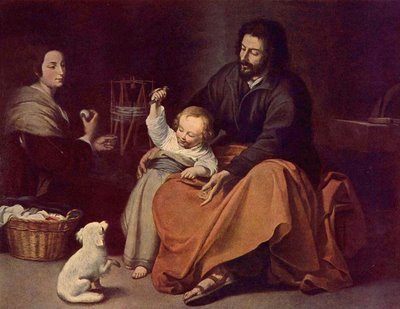 Yes, and so it is. When you are right and your spouse is wrong, any time, there remains the option for you to be right the "right way", not be right the "wrong way". (See previous post.) By being right the "right way", you respond to injustice or falsehood with dignity, not give up your dignity and bring you both down.
In a moment, a moment when you are right and your spouse is wrong, you are the "anchor" for the relationship, the marriage. You are the one, between the two of you, who God has in that moment handed personal responsibility and moral authority to, by your very position of being the one right, and your spouse being the one wrong. Thus you are required to lead the two of you in that morality given you that was handed you with calmness, understanding and patience.
You must allow your spouse to be wrong at times.
A different way of thinking says, "But if I keep letting him do this, he or she will never change!"
But have you ever stopped to ask yourself "Why does my loved one keep doing the same thing that's wrong over and over?
Well, it is psychologically relevant that you consider that when a person in your family keeps being wrong the same way over and over, and you can't seem to make the wrong behavior stop, it is possible that your family member "needs" to be wrong because "being wrong" is the first step to "being right" and "facilitating change!"
Yet you might reply, "But I have "told" him and I have "told" him over and over. Still he will not listen to me!!!" ... "I could talk until I'm ‘blue in the face', but it accomplishes nothing!!!"
Well, this is a critical question isn't it, "When you were right in what you said to him, did you say what was right in anger or impatience? Has there ever been rage, threats or insults from you on this precise wrong he or she keeps doing? If so, then perhaps your being right the wrong way, is what stands in the path of your husband or wife proceeding in the process of making that wrong behavior better.
You see, people do not like being "told" what to do. We humans are so tempted to do the "opposite" of what we're told, when what we're told (although right) is said in anger, rage, impatience and threats.
Even Christ did not force His will on people. But He was patient and kind.
"But my husband was impatient with me first!" you say ... "But my wife seems so cold and angry, what else am I to do but defend myself and insist I'm right??!!!"
That's the central point isn't it. "What to do when the other person is wrong first."
Well, in the Sermon On the Mount Christ said:
"... if you bring your gift to the altar, and there remember that your brother has something against you, leave your gift there before the altar, and go your way. First be reconciled to your brother, and then come and offer your gift." (Matthew 5:23-24)
What is amazing this is what Christ "didn't" say. He "didn't say" to leave your gift at the altar, then go reconcile "if what your brother has against you is relevant, "makes sense" or is "correct" in having something against you."
You see, "Love... suffers long and is kind, ... does not behave rudely, does not seek its own, is not provoked, thinks no evil, ... bears all things, believes all things, hopes all things, endures all things. Love never fails." (I Corinthians: 4, 5, 7, 8 (a))
Yet, you might say, "But my husband (or wife) was impatient with me first!" ... "Does this mean he (she) does not love me????"
Absolutely not. When your husband or wife is wrong in something, that only means he or she is weak, "Not That He Or She Does Not Love You!!!. Be it a reaction, a word, an action, a decision ... your husband or wife is the one between the two of you who is at that time most "weak", that is all. ..... Let it happen. ..... It is necessary. And don't worry, there will be your turn to be the one weak, thus wrong. You will need the strength reciprocated in the marriage.
Your spouse needs to be wrong sometimes. (And I mean husband "and" wife.) When it happens (and it will), don't worry, it will be your turn to be wrong and weak another time. For now though, be right graciously.
Remember, in marriage, the two of you are ONE. Nothing has really happened BAD until "both" of you act badly. Too easily, however, negativity can escalate, then the two in marital bond can spiral downward.
It is only in responding correctly, thus patiently, that your being "right" brings balance, even veneration, to your mate's experience of wrong. For just as it takes "two" to argue, it especially takes "two" to "continue" the argument. Thus one can choose, while being right, to be right calmly.
You cannot be your spouse's conscience. As you try to be his (or her) conscience, you will actually accomplish the opposite. Remember, he or she must be wrong first, in simple or big things, before being right through hearing the small, still voice of God.
"Father, grant me the peace and strength to be the one who is strong and gracious if I must in my marriage today. Remind me in your mercy, that I will often need such kindness as well."
Saturday
When You Are Right, And Your Spouse Is Wrong

"There is more hunger for love and appreciation in this world than for bread."
Mother Teresa of Calcutta (Albanian born Indian Missionary and Founder of the Order of the Missionaries of Charity. Nobel Prize for Peace in 1979. 1910-1997)
************
No, really, I'm not joking. "What about the times you are 'right", and your husband or wife is 'wrong'?" It "does" happen you know. Let's admit that. Sometimes you are right and the one you are married to is wrong. Maybe "too" often, and "too" wrong. Or so it seems. Honestly, it seems that way. Right??!!!
After reading WHAT CATHOLICS BELIEVE (PART ONE), you see that everything that's basic to Christian marriage is spelled out remarkably in the Catholic Catechism ("Part Two" is coming soon). However, there's another step in our process of assimulating truth which can be referred to as Catholic Psychology. That is: "When you are 'right' and the other person is 'wrong', if your response to that other person's 'wrong' is 'also wrong', then you are no longer 'right', but you have become 'more wrong' than the 'wrong' the other person was 'wrong' with, because you used the position of being 'right" to get there!"
"Remember, when our Lord was in the flesh on earth, He was continually merciful, understanding and forgiving to "everyone", but not with the "Scribes and Pharisees" who used their position and knowledge of being "right", to make themselves appear better than others while they did so in sarcasm impatience and anger. ... And wow, was Christ ever angry with them!!!!!
You see, when you as a husband or wife are "right", and your husband or wife is "wrong", how do you think you arrived to being "right" in the first place??? Do you think your "being right" comes from your own superior skill of reasoning?"
No. ... Do not be mistaken. ... If you are "right" and your husband or wife is "wrong", you are in the position of being "right" because "being right" was given to you by God. He chose "you" to be the one who would be "right" this time. And it is "He" who makes you and the one you love ONE, and continues to do so as He promised!
How otherwise will a marriage grow in understanding and loving service to our Lord? The only way a marriage can survive and flourish in this world of confusion, is that when one of the two in the marriage is "wrong", the other is not only "right", but "stays right".
You see, it is "inevitable" that in the experiences of home life, wrong words will be said, wrong actions will be taken. It is absloutely certain that in instances, wrong feelings will be felt, and wrong thoughts will be thought. But you and the person you married are "ONE", not "Two". So how does "one" that once was "two" grow and become more than they ever would have been alone???!!!
Well, not to be silly here, but it is as if the two of you will practically "take turns being wrong!" And you will each be wrong in ways each will not recognize in the moment, accept by the help of the other (and by God).
Admit it, you are "both" wrong through various times of day and night, and then, when you insist you are "right", that is when you are the "most wrong", because your being "right" is done in "anger" and "self-righteousness" (The very things Christ hates).
See clearly, isn't it sometimes the case that a husband is strong and the wife is weak? Aren't there occasions when the wife is strong and the husband is weak? Then surely you do not believe you are strong "all" the time, and the one you are ONE with is weak "continuously!!!" ... No, first one will be "weak", and thus wrong", then the other will be "strong, and thus right". This deep marital experience, our vocation to God, will manifest into a host of varitable patterns, and that, because the two human-beings of opposite genders are no longer "two" but "ONE!"
As the apostle Paul wrote:
"For we do not wrestle against flesh and blood, but against principalities, against powers, against the rulers of the darkness of this age, against spiritual hosts of wickedness in the heavenly places." (Ephesians: 6:12)
There are pressures, tensions, responsibilities, temptations and misunderstandings that are common to marriage, but are not entirely common in singleness. When you are married with the potential of bringing offspring of souls into the world to be children of God for all of eternity, there are entities and powers greater than mere psychology or what you "think", that wish to destroy you and your sacred marital bond.
More about this later, but for now I ask you, "How can your husband or wife recover from the traumatic, complicated, physically exhausting experience of being wrong (on any level), if you insist on making that situation an opportunity to prove that you are 'more right'?"
Say what you have to say, then say no more. Don't make things worse than it already is. God is ONE with the two of you. Because of that marital trinity (God, husband, wife), then this person you share marital vows with will change something that is necessary to change, because after making your statement, you then step back so God can speak and the other can hear God speak without distraction.
Friday
What Catholics Believe About Marriage (Part One)
 There are Catholics who have stopped living their faith. Some have become comfortable with what the world offers them. Catholocism is a "culture" to them. Something they grew up under, but ignoring what was said to them. This has convinced others that Christian Catholics are hypocritics, believing in only "works" for salvation. The Church is rediculed, called too traditional, religious and without faith. ..... How they are so mistaken.
For we many Catholics who "are" serious about what we believe, let us read with our husbands and wives the purposes and means of our marital vocations as stated in the remarkable Catechism of our Faith:
(Note: This is prelude for where we're headed in our exhaustive discussion of Catholic Psychology in relation to the many circumstances that threaten peace and stability in our marriages and homes.)
1601 "The matrimonial covenant, by which a man and a woman establish between themselves a partnership of the whole of life, is by its nature ordered toward the good of the spouses and the procreation and education of offspring; this covenant between baptized persons has been raised by Christ the Lord to the dignity of a sacrament."84
1603 "The intimate community of life and love which constitutes the married state has been established by the Creator and endowed by him with its own proper laws. . . . God himself is the author of marriage."87 The vocation to marriage is written in the very nature of man and woman as they came from the hand of the Creator. Marriage is not a purely human institution despite the many variations it may have undergone through the centuries in different cultures, social structures, and spiritual attitudes. ...
1604 "... Since God created him man and woman, their mutual love becomes an image of the absolute and unfailing love with which God loves man. It is good, very good, in the Creator's eyes. ..."
1605 Holy Scripture affirms that man and woman were created for one another: "It is not good that the man should be alone."92 The woman, "flesh of his flesh," his equal, his nearest in all things, is given to him by God as a "helpmate"; she thus represents God from whom comes our help.93 "Therefore a man leaves his father and his mother and cleaves to his wife, and they become one flesh."94 The Lord himself shows that this signifies an unbreakable union of their two lives by recalling what the plan of the Creator had been "in the beginning": "So they are no longer two, but one flesh."95
1606 Every man experiences evil around him and within himself. This experience makes itself felt in the relationships between man and woman. Their union has always been threatened by discord, a spirit of domination, infidelity, jealousy, and conflicts that can escalate into hatred and separation. This disorder can manifest itself more or less acutely, and can be more or less overcome according to the circumstances of cultures, eras, and individuals, but it does seem to have a universal character.
1607 According to faith the disorder we notice so painfully does not stem from the nature of man and woman, nor from the nature of their relations, but from sin. As a break with God, the first sin had for its first consequence the rupture of the original communion between man and woman. Their relations were distorted by mutual recriminations;96 their mutual attraction, the Creator's own gift, changed into a relationship of domination and lust;97 and the beautiful vocation of man and woman to be fruitful, multiply, and subdue the earth was burdened by the pain of childbirth and the toil of work.98
1608 Nevertheless, the order of creation persists, though seriously disturbed. To heal the wounds of sin, man and woman need the help of the grace that God in his infinite mercy never refuses them.99 Without his help man and woman cannot achieve the union of their lives for which God created them "in the beginning."
1609 In his mercy God has not forsaken sinful man. The punishments consequent upon sin, "pain in childbearing" and toil "in the sweat of your brow,"100 also embody remedies that limit the damaging effects of sin. After the fall, marriage helps to overcome self-absorption, egoism, pursuit of one's own pleasure, and to open oneself to the other, to mutual aid and to self-giving.
1610 ... the law given to Moses aims at protecting the wife from arbitrary domination by the husband, even though according to the Lord's words it still carries traces of man's "hardness of heart" which was the reason Moses permitted men to divorce their wives.101
1611 Seeing God's covenant with Israel in the image of exclusive and faithful married love, the prophets prepared the Chosen People's conscience for a deepened understanding of the unity and indissolubility of marriage.102 The books of Ruth and Tobit bear moving witness to an elevated sense of marriage and to the fidelity and tenderness of spouses. Tradition has always seen in the Song of Solomon a unique expression of human love, insofar as it is a reflection of God's love - a love "strong as death" that "many waters cannot quench."103
1614 ... The matrimonial union of man and woman is indissoluble: God himself has determined it "what therefore God has joined together, let no man put asunder."107
1615 This unequivocal insistence on the indissolubility of the marriage bond may have left some perplexed and could seem to be a demand impossible to realize. However, Jesus has not placed on spouses a burden impossible to bear, or too heavy - heavier than the Law of Moses.108 By coming to restore the original order of creation disturbed by sin, he himself gives the strength and grace to live marriage in the new dimension of the Reign of God. It is by following Christ, renouncing themselves, and taking up their crosses that spouses will be able to "receive" the original meaning of marriage and live it with the help of Christ.109 This grace of Christian marriage is a fruit of Christ's cross, the source of all Christian life.
1616 This is what the Apostle Paul makes clear when he says: "Husbands, love your wives, as Christ loved the church and gave himself up for her, that he might sanctify her," adding at once: "'For this reason a man shall leave his father and mother and be joined to his wife, and the two shall become one. This is a great mystery, and I mean in reference to Christ and the Church."110
1617 The entire Christian life bears the mark of the spousal love of Christ and the Church. Already Baptism, the entry into the People of God, is a nuptial mystery; it is so to speak the nuptial bath.111 which precedes the wedding feast, the Eucharist. Christian marriage in its turn becomes an efficacious sign, the sacrament of the covenant of Christ and the Church. Since it signifies and communicates grace, marriage between baptized persons is a true sacrament of the New Covenant..112
1620 Both the sacrament of Matrimony and virginity for the Kingdom of God come from the Lord himself. It is he who gives them meaning and grants them the grace which is indispensable for living them out in conformity with his will.117 Esteem of virginity for the sake of the kingdom118 and the Christian understanding of marriage are inseparable, and they reinforce each other:
1621 In the Latin Rite the celebration of marriage between two Catholic faithful normally takes place during Holy Mass, because of the connection of all the sacraments with the Paschal mystery of Christ.120 In the Eucharist the memorial of the New Covenant is realized, the New Covenant in which Christ has united himself for ever to the Church, his beloved bride for whom he gave himself up.121 It is therefore fitting that the spouses should seal their consent to give themselves to each other through the offering of their own lives by uniting it to the offering of Christ for his Church made present in the Eucharistic sacrifice, and by receiving the Eucharist so that, communicating in the same Body and the same Blood of Christ, they may form but "one body" in Christ.122
1624 The various liturgies abound in prayers of blessing and epiclesis asking God's grace and blessing on the new couple, especially the bride. In the epiclesis of this sacrament the spouses receive the Holy Spirit as the communion of love of Christ and the Church.124 The Holy Spirit is the seal of their covenant, the ever available source of their love and the strength to renew their fidelity.
1638 "From a valid marriage arises a bond between the spouses which by its very nature is perpetual and exclusive; furthermore, in a Christian marriage the spouses are strengthened and, as it were, consecrated for the duties and the dignity of their state by a special sacrament."140
1639 The consent by which the spouses mutually give and receive one another is sealed by God himself.141 From their covenant arises "an institution, confirmed by the divine law, . . . even in the eyes of society."142 The covenant between the spouses is integrated into God's covenant with man: "Authentic married love is caught up into divine love."143
1640 Thus the marriage bond has been established by God himself in such a way that a marriage concluded and consummated between baptized persons can never be dissolved. This bond, which results from the free human act of the spouses and their consummation of the marriage, is a reality, henceforth irrevocable, and gives rise to a covenant guaranteed by God's fidelity. The Church does not have the power to contravene this disposition of divine wisdom.144


